
Sea Bass vs Sea Bream: What’s the Difference?
Sea bass and sea bream can look similar on a fish display, but their shape and texture make them easy to tell apart. When comparing sea bass vs sea bream, the more useful question is which type of flesh you prefer: delicate and tender or firmer and meatier. At Restaurant Adriatic, our menu includes sea bass fillet alongside a changing selection of white fish. This comparison covers European sea bass, Dicentrarchus labrax, and gilthead sea bream, Sparus aurata. Both have white flesh and work well grilled with olive oil, but neither is universally better.
Sea Bass and Sea Bream at a Glance
European sea bass and gilthead sea bream belong to different fish families. For diners, the main differences are their appearance, typical texture and common preparations.
| Sea bass | Gilthead sea bream | |
|---|---|---|
| Croatian names | brancin, lubin | orada, komarča |
| Appearance | Elongated and streamlined, silvery gray, two separate dorsal fins | Deeper, oval, compressed body; silvery gray with a gold band across the head between the eyes |
| Typical flavor | Usually described as mild and clean | Usually described as sweeter, a little more pronounced |
| Texture | Generally delicate and tender, with lighter flakes | Generally firmer and meatier, with denser flakes |
| Common preparations | Grilled or roasted whole, filleted with light sauces | Grilled or roasted whole, baked in a salt crust, filleted |
Flavor and texture here are tendencies rather than fixed properties. Size, season and handling can affect both fish.
Which Tastes Better?
There is no universal winner; the better choice comes down to personal preference. Compared with sardines, mackerel or tuna, both are relatively mild fish. The differences between them are mainly in flavor and texture, so the better choice depends on what you prefer.
Flavor
Sea bass is generally described as the milder and more neutral of the two, with a subtle sweetness that works well with olive oil, lemon and herbs. Sea bream is often described as slightly sweeter, with a more pronounced flavor of its own. Freshness, seasoning and cooking also affect the final result, so the species alone does not determine which fish will taste better.
Texture
Sea bass generally has a more delicate texture, while gilthead sea bream tends to have firmer, meatier flakes. If you prefer a lighter bite, sea bass may suit you better. Sea bream is a better choice if you prefer firmer, more substantial flesh. Size, sourcing and cooking can also affect the texture.
Thickness also matters. A whole fish can dry out if it is overcooked, regardless of the species, while a thick fillet will naturally have a meatier texture than a thin fillet from a smaller fish of the same species.
How to Tell Them Apart
Look at the head first. Gilthead sea bream has a distinctive golden band between the eyes, which gives the fish its name. Sea bass has no such marking and has a different shape: it is longer and more streamlined, while the bream has a deeper, rounder and more laterally compressed body.
On Croatian menus, sea bass appears as brancin or lubin, while gilthead sea bream is listed as orada or komarča. You may also come across names such as zubatac and kovač. Our guide to the different types of fish found on restaurant menus can help you recognise these names and understand how they differ.
What About Bones?
Both fish have bones, and the main difference for diners is whether they are served whole or as a prepared fillet. A whole fish has a central spine, rib bones and smaller bones along the flesh that require some care while eating. Fillets remove most of this work, although small pin bones can remain. If you are unsure how the fish is served, ask before ordering: our staff can tell you whether it comes whole, portioned or filleted, and whether it can be deboned at the table.
How Are They Best Prepared?
Both fish work well with simple preparations. They can be cooked whole over fire or served as fillets, and their mild flavor pairs well with sauces, olive oil and herbs. This makes both common choices on Mediterranean menus.
Grilled or Baked Whole
Cooking the fish whole helps keep the flesh moist and allows the skin to protect it from direct heat. Grilling adds a smoky flavor and can crisp the skin, while salt, olive oil and lemon are enough to season either species.
A whole fish also includes the cheek meat and allows you to lift the flesh from the bones yourself. Fillets offer a simpler portion and may still be served with the skin on.
Served as Fillets
A prepared fillet usually means fewer bones to work around, although small pin bones can remain. It also makes it easier to pair the fish with vegetables, beurre blanc or a shellfish sauce. These accompaniments can work with whole fish too, depending on the dish.
Neither preparation is specific to one species, so check the menu rather than assuming how the fish will be served.
Which Should You Order in Croatia?
Start with the texture and preparation you prefer. The selection changes, so ask which fish is available and how the kitchen recommends serving it. A few simple guidelines can help:
- If you prefer delicate flakes and a mild flavor, choose sea bass.
- If you prefer firmer, meatier flesh, choose sea bream.
- Both work well as whole grilled fish, so choose a size that suits your appetite.
- If you prefer a fillet, check the menu description rather than assuming the format from the sauce or accompaniments.
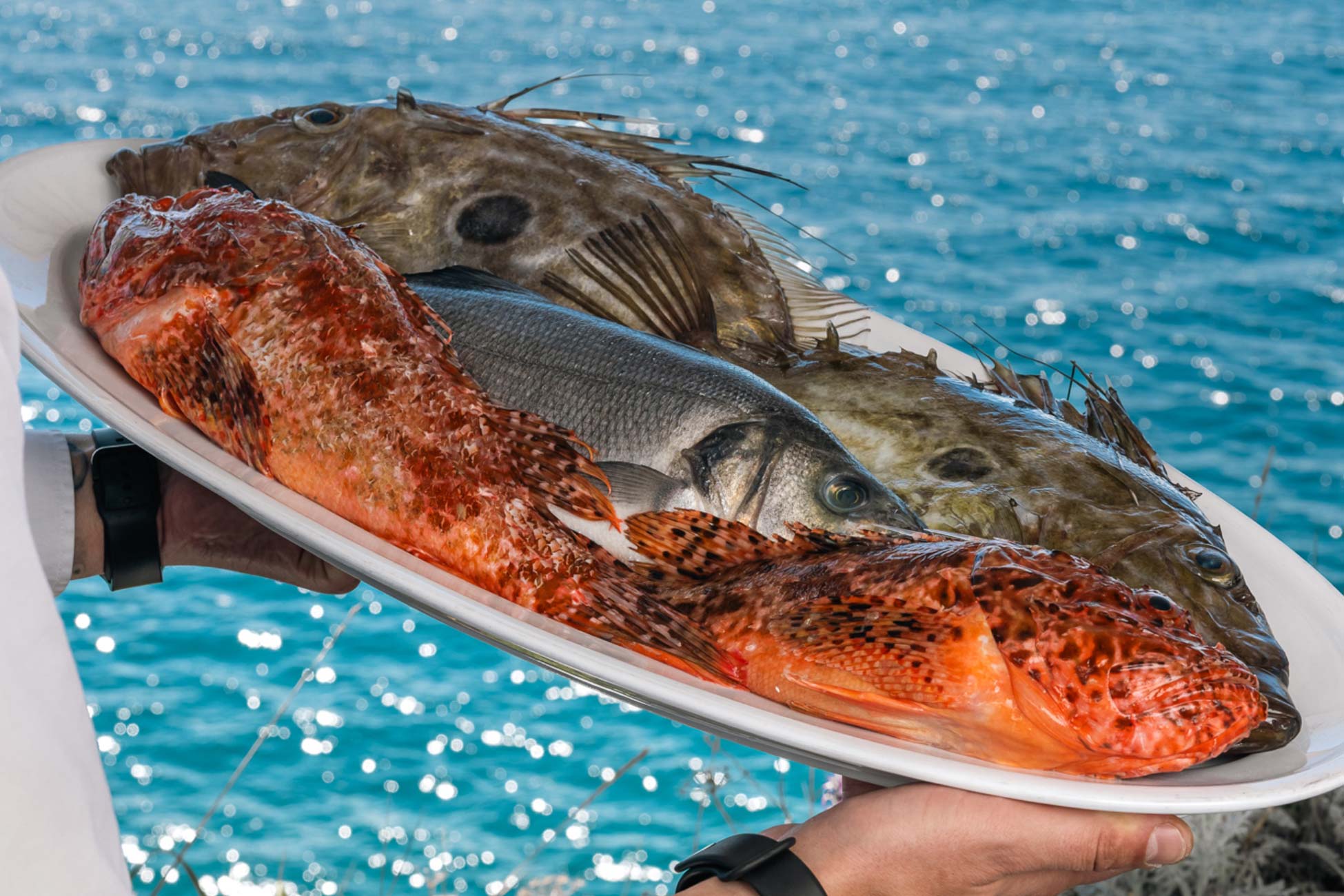
If sourcing matters to you, ask the restaurant where the available fish comes from. At Adriatic, we source wild-caught fish from fishermen around Vis. Our team can tell you which fish are available and recommend a suitable preparation. If fish is sold by weight, confirm the weight and price before it goes to the kitchen. On our fish and seafood menu, the catch of the day can be served grilled, gregada style or as brodetto. Ask about the available fish and choose the preparation you prefer.
Enjoy Fish at Restaurant Adriatic
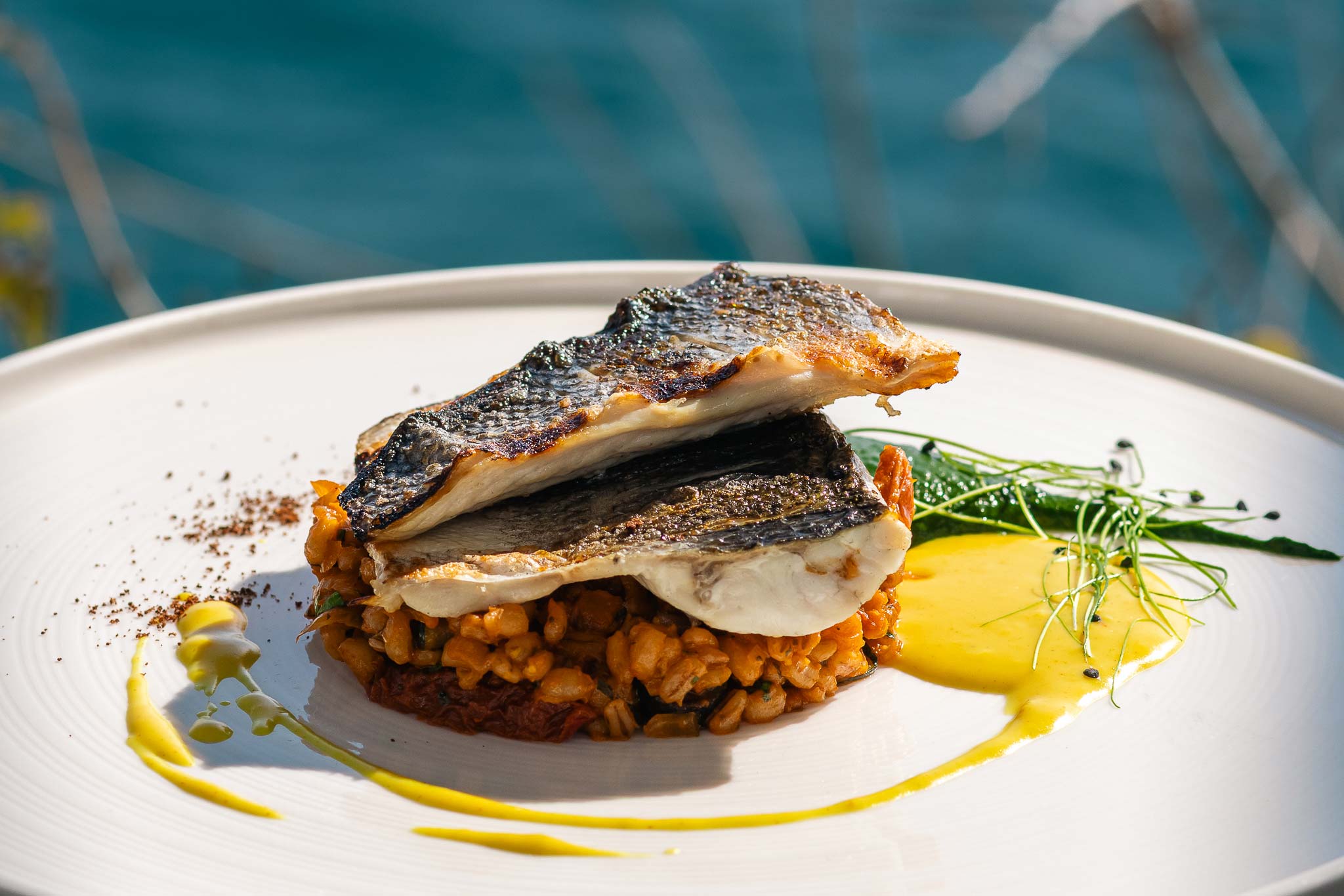
Our à la carte menu includes sea bass fillet, served with barley, zucchini and sun-dried tomatoes in a shrimp sauce with spinach cream and saffron beurre blanc. The menu also includes a changing catch of the day, which can be prepared grilled, gregada style or as brodetto.
Choose our sea bass fillet if you like its accompaniments, or ask our team about the white fish available that day. Join us on Sustipan for lunch or dinner overlooking the sea, and book your table in advance during the busier season.
Frequently Asked Questions

Is Branzino Sea Bass or Sea Bream?
Branzino is sea bass. It is the Italian name for European sea bass, Dicentrarchus labrax, and is commonly used on menus in Italy and North America. It does not refer to sea bream.
Can You Eat the Skin of Sea Bass and Sea Bream?
Yes. The skin of both fish can be eaten when properly scaled, cleaned and cooked. Grilling or roasting can make it crisp, although whether you enjoy it is a matter of personal preference.
Can You Substitute Sea Bream for Sea Bass?
Usually, yes. Both fish work well with many of the same preparations. Keep the size in mind, though: a thicker fillet or a larger whole fish will need more time over the heat than a smaller one.