
White vs Black Truffle: What’s the Difference?
Shave a fresh truffle over warm pasta and the whole table goes quiet for a moment. That aroma is why cooks and food lovers never stop comparing white vs black truffle. The biggest differences come down to aroma, price, and the way each is used in cooking. White truffles release an intense, garlicky perfume that fills the room, while black truffles have a deeper, earthier aroma that develops beautifully when cooked. Both grow in only a few regions of Europe, making them among the world’s most prized ingredients. Once you understand the difference, choosing the right truffle dish becomes much easier so you know exactly what to look for on our menu and what to expect on the plate.
What Is a Truffle?
A truffle is the edible fruiting body of a wild fungus that grows underground, close to the roots of trees like oak, hazel, and poplar. The fungus and the tree live in a symbiotic relationship, which is why truffles only grow in specific soils, climates, and woodland habitats.
Unlike typical crops, truffles cannot simply be planted and harvested on demand. Foragers rely on trained dogs to sniff out ripe truffles a few inches below the surface, then dig them up by hand. That difficulty, plus a short season, is a big part of why truffles cost what they do.
Although hundreds of truffle species exist, white and black truffles are by far the most valued in fine dining. Each offers a distinct flavour profile and culinary experience, making them the varieties most often featured in premium restaurants.
White vs Black Truffle: Key Differences
White and black truffles differ in appearance, aroma, texture, seasonality, price, and the way they are used in cooking. The table below provides a quick comparison, while the following sections explore each difference in more detail.
| Attribute | White Truffle | Black Truffle |
|---|---|---|
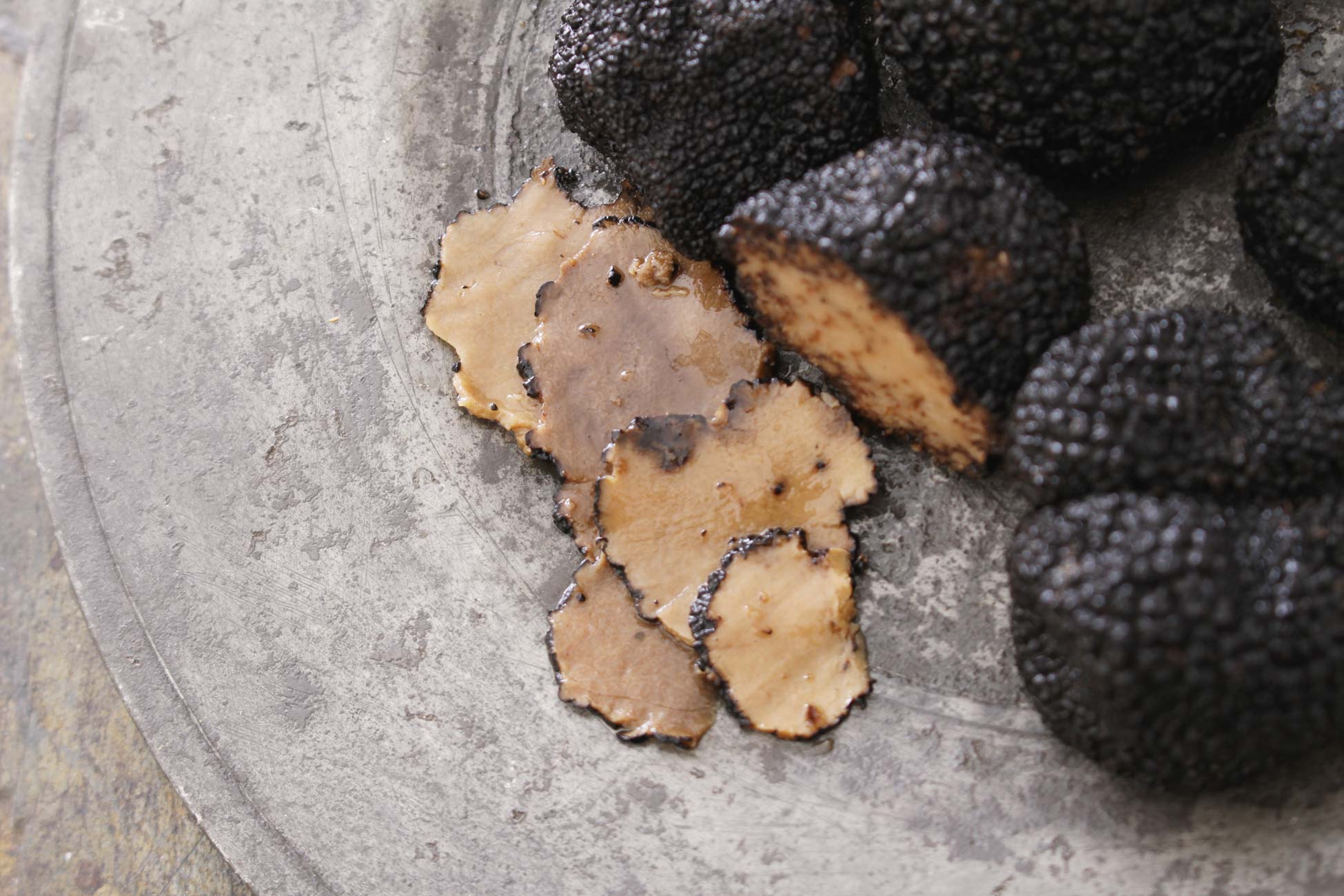
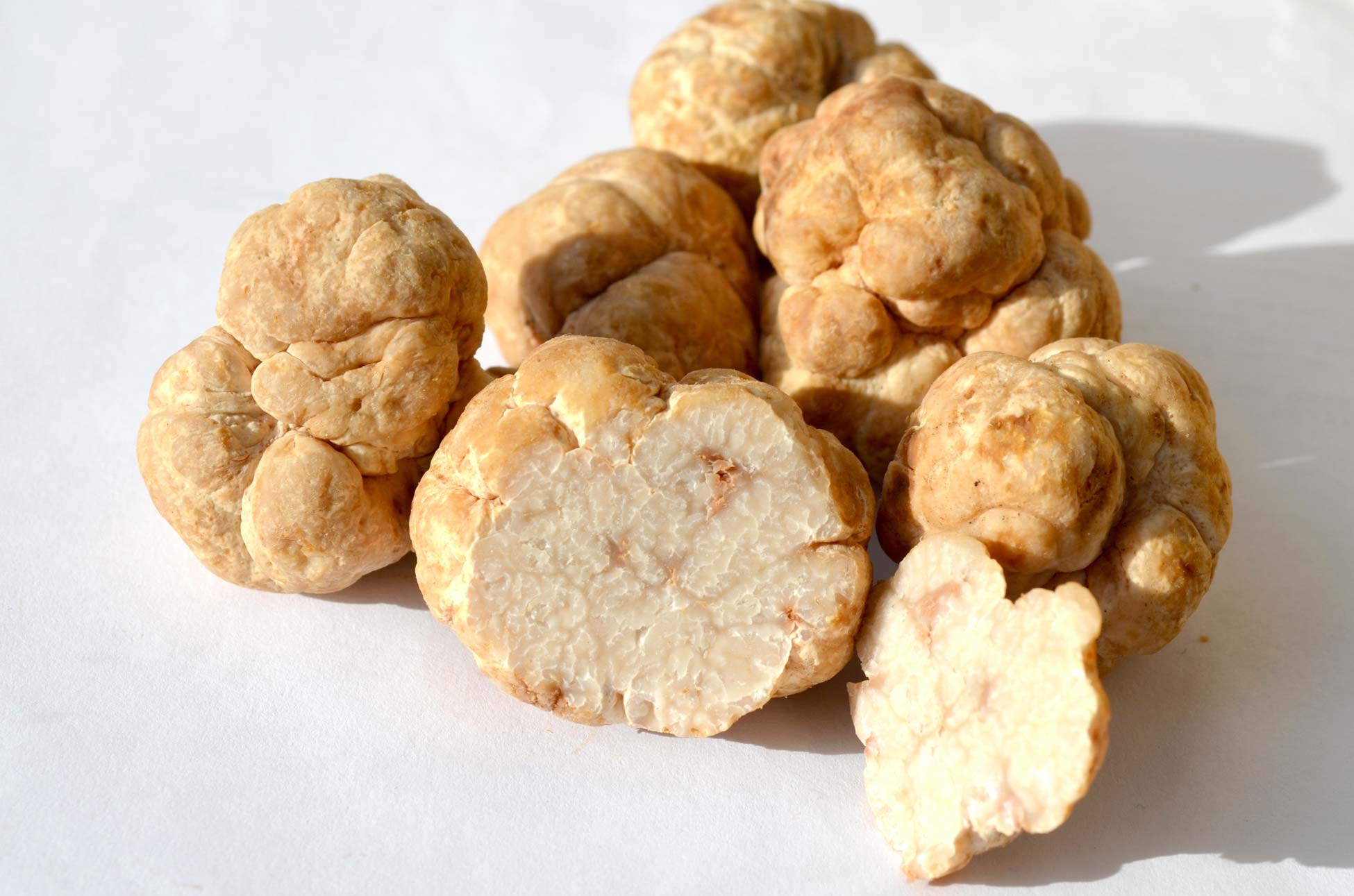
| Appearance | Smooth pale skin, cream to ochre; beige flesh with fine pale veins | Rough dark warty skin, deep brown to black flesh with thin white veins |
| Texture | Firm but delicate; eaten raw only | Denser, holds its shape; stands up to cooking |
| Price and Rarity | Rarest and most expensive, often several thousand dollars a pound | Costly but more affordable; winter black runs below white |
| Harvest Season | Autumn, roughly September to December | Winter black December to March; summer black May to August |
| Shelf Life and Storage | Very short, about 5 to 7 days; refrigerate in rice or paper | Longer, up to 1 to 2 weeks; refrigerate wrapped, keep moisture away |
Appearance
White truffles have a smooth skin that ranges from cream to a light ochre. When cut open, the interior reveals pale beige flesh crossed by fine white veins. Size runs from a walnut to a small fist.
Black truffles look noticeably rougher. The skin is dark, rigid, and pitted, almost like tree bark, while the interior ranges from deep reddish-brown to black with thin white veins. The look alone instantly tells you which variety landed on the board.
Texture
Fresh white truffles are firm yet delicate. Their aroma fades quickly when heated, so they are almost always shaved over a finished dish just before serving.
Black truffles are denser and retain both their texture and aroma much better during cooking. They are commonly incorporated into sauces, stuffing, and eggs.
Price and Rarity
White truffles top the price list. They cannot be farmed reliably, the harvest season is exceptionally short, and global demand outstrips supply every autumn. In a good year, a pound might run a few thousand dollars; in a lean harvest, far more.
Black truffles cost less, though the prized winter black still carries a premium price tag. Summer black truffles are the most affordable of the group, making them a popular choice for everyday truffle dishes.
Harvest Season
White truffle season runs through autumn, roughly from September to December, peaking in October and November. That narrow window is when Istrian and Piedmont menus fill with fresh shavings.
Black truffles spread across far more of the calendar. The prized winter black comes up from December to March, while the milder summer black is dug from May through August. Thanks to overlapping harvest seasons, fresh black truffles are available nearly year-round.
Shelf Life and Storage
Fresh truffles are highly perishable, and white truffles are the ultimate divas of the fridge. Plan to use a white truffle within five to seven days. Store it cold in a sealed jar wrapped in a dry paper towel or submerged in dry rice, swapping the paper daily to keep humidity away.
Black truffles last a little longer, often up to two weeks if handled well. Wrap them loosely, keep moisture away, and check often for soft spots. Freezing works in a pinch, though the delicate aroma will fade.
What Is White Truffle?
The white truffle (Tuber magnatum) is the rarest and most prized truffle in the kitchen, valued for an aroma so intense it fills a whole room in seconds. It is always eaten raw and never cooked, which makes each harvest as much a seasonal event as a culinary ingredient.
Where White Truffles Grow
White truffles grow wild in only a few places, where the soil is alkaline, the moisture is steady, and the right host trees, oak, poplar, or hazel, share their roots. The original and most famous home is northern Italy, in the Langhe and Montferrat hills around Alba and Asti. Croatia is the other major global stronghold, centered in Istria, where foragers work the woods around Motovun, Buzet, and the Mirna River valley from September onward. Istria takes immense pride in them: a white truffle found near Buje in 1999 earned a place in the Guinness Book of Records for its massive size. For our kitchen, the finest whites are harvested just a short drive away.
What White Truffles Taste and Smell Like
Aroma is the entire point of a white truffle. Imagine sharp wild garlic, aged cheese, shallots, and a hint of earthy ferment, all striking at once. The smell hits your senses well before the first bite.
On the palate, the flavor is milder than the nose promises – savory, slightly peppery, and lifted by that signature garlicky note. Because heat kills the aroma rapidly, chefs treat white truffles strictly as a raw finishing touch and never a cooked ingredient.
What Are Black Truffles?
Black truffles are the darker, earthier relatives of the white truffle, and the name covers several edible species. The most valued is the black winter truffle (Tuber melanosporum), though the milder summer type (Tuber aestivum) is common too. Both hold their flavor under heat, allowing cooks to infuse them directly into the dish itself.
Where Black Truffles Grow
Black truffles grow across more of Europe than whites. Their original heartland is France, split between the southeast around Provence and the Vaucluse and the southwest around the Périgord and Quercy. The winter black also grows in Spain and central Italy, and growers now cultivate it in specialized orchards as far away as Australia and the United States. Croatia has them as well: in Istria, both summer and winter types appear from spring through the cold months, giving local chefs a reliable supply of fresh truffles for much of the year.
What Does Black Truffle Taste Like?
Black truffle tastes deep and earthy, with distinct notes of cocoa, forest floor, toasted nuts, and a whiff of dark fruit. The winter black is the boldest variety, rich and almost chocolatey. Summer black is gentler, leaning closer to hazelnut and damp earth.
Because a black truffle retains much of its character under heat, gentle warming in fat or a quick turn in the pan opens its essential flavor right up.
Which Truffle Should You Choose?
The right truffle depends on the dish, the season, and your budget. There is no single winner, and honestly it comes down to what you are cooking and when you are eating it. A simple rule of thumb: pair the truffle variety with the required cooking technique and your intended budget.
When to Choose White Truffles
Choose white truffles in the autumn months when you want an intense, unforgettable aromatic experience. It suits a special occasion where the truffle takes center stage on a simple, raw-finished plate, and where the budget has room for a splurge. Outside of autumn, fresh white truffle is exceptionally hard to find and priced to match.
When to Choose Black Truffles
Opt for black truffles when seeking an earthy depth that holds up to cooking, or when craving fresh truffle flavor outside the brief autumn window. Since black truffles hold their flavor in the pan, they belong in hearty, warm dishes where a small amount goes a long way. They also make complete sense for an elevated weeknight meal, as summer black costs a fraction of a white truffle.
How Chefs Use White and Black Truffles in Mediterranean Cuisine
In Mediterranean kitchens, truffles function as a seasonal luxury that elevates simple, high-quality local ingredients. Cooks along the Adriatic, from Istria down to Dalmatia, treat them with restraint. The same culinary philosophy runs through our menu in Split, where a few grams of fresh truffle over the right plate completely transforms the meal.
Pairing Truffles with Pasta and Risotto
Pasta and risotto are the ultimate canvases for truffles because starch and fat carry the delicate aroma perfectly. For white truffle, chefs finish a buttery tagliatelle or a creamy Parmesan risotto off the heat, then shave the raw truffle on top right at the table. For black truffle, they work grated truffle into a butter or cream sauce, a warm bowl of gnocchi, or a pot of polenta while it cooks, ensuring the earthy flavor reaches every single bite.
Enhancing Seafood with White Truffles
White truffle over delicate seafood is a quiet, sophisticated luxury. We pair it best with raw scampi, handmade pasta with shrimp, or a mild white fish crudo, the kind of daily catch that also appears across our fresh seafood dishes. The truffle goes on warm, shaved right before serving. A light touch on the seasoning lets the seafood’s sweetness meet its garlicky perfume.
Pairing Black Truffles with Meat Dishes
Earthy truffle plays off the richness of beef, lamb, and veal, which is why it works so well with our grilled meat and Dalmatian classics such as veal steak. A few shavings over a prime steak or folded through a rich reduction sauce allow the heat of the dish to wake the truffle up and draw its flavor into the plate.
Why Simple Ingredients Let Truffles Shine
Truffles reward restraint. Place one over a plate crammed with five competing flavors, and the subtle aroma disappears in the noise. Served over eggs, butter, fresh pasta, or a soft cheese, it gains the room it needs to breathe.
For a cook, the lesson is practical: build a clean, perfectly executed base, then add the truffle as the final defining note. Our kitchen leans heavily into this approach, maintaining short ingredient lists and a strict focus on what is currently in season.
Chef Tips for Serving White and Black Truffles
A few habits separate a good truffle plate from a wasted one:
- Add white truffle raw, off the heat, at the last possible second
- Cook black truffle into the dish so the flavor spreads
- Warm the plate first, since heat from the food releases the aroma
- Use a truffle shaver or fine grater for even, thin slices
- Store truffles in rice or paper and use them fast
- Taste as you go, because a heavy hand overwhelms the plate
Taste the Difference for Yourself
By now, the distinction is clear. A white truffle is an autumn showpiece, shaved raw over a warm, simple plate so its volatile aroma takes the lead. A black truffle is the chef’s versatile partner, grated directly into sauces, pasta, and roasts for a deeper, subterranean flavor across a much longer season. Which one belongs on your plate comes down to the time of year, the dish, and the budget.
We feature both truffles on our menu in season across dishes built on local catch and premium Croatian meats – including signature creations like monkfish in a nut crust finished with a rich truffle sauce, all served overlooking the Adriatic Sea.
Book a table on our seafront terrace to try white and black truffle in their season, or reserve the space for a private dinner.
Frequently Asked Questions
Are White Truffles More Expensive Than Black Truffles?
Yes. White truffles are the rarest of all and cannot be cultivated the way black ones sometimes are. As a result, they often cost several times more per gram, especially during their autumn peak.
Can You Cook White Truffles?
Not really. Direct heat destroys the white truffle’s delicate aroma within minutes. Always shave them raw over warm dishes at the last second, and leave the actual cooking to black truffles.
Why Are Truffles So Expensive?
Truffles grow wild underground, cannot be farmed on demand, and have short annual seasons. Foragers hunt them individually with trained dogs, and global demand far outpaces the limited natural supply each year.
Can White and Black Truffles Be Used Interchangeably?
No. They feature completely different flavor profiles and heat tolerances. White truffles finish raw dishes with an intense garlicky aroma, while black truffles cook directly into sauces and meats to deliver an earthy depth.
How Should Fresh Truffles Be Stored?
Keep truffles cold in a sealed jar with dry rice or paper towel, changed daily. Use white truffles within a week and black within two for the best aroma.