
Best Croatian Wines and How to Pair Them with Fish and Meat
A Croatian wine list can easily overwhelm first-time visitors: unfamiliar grape names, regions that mean little at first, fish ordered at one end of the table and lamb at the other. The best Croatian wines are not difficult to drink; they are simply difficult to recognize. Once you know a few key names, the rest becomes much easier.
Three names will carry you through most of the coast. Pošip and Malvazija among the whites, Plavac Mali among the reds. Between them, they can cover everything from grilled sea bass and prosciutto to beefsteak, which is roughly the range of an evening on our terrace, whether the table has gone for fresh fish and seafood or something off the grill. Everything after that is refinement.
Croatian Wine Regions and the Grapes to Know from Each
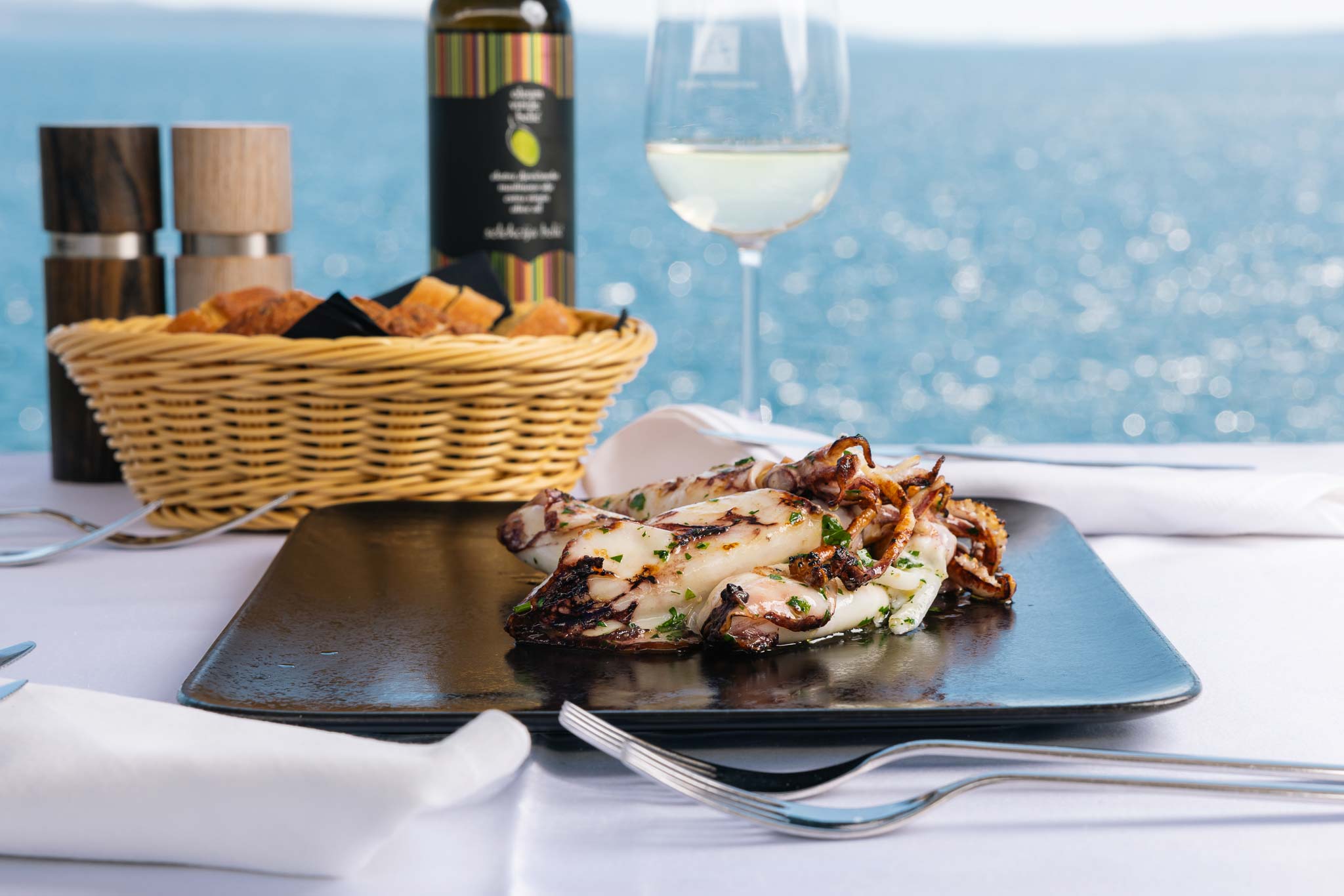
Croatia’s wine regions fall broadly into continental and coastal climatic zones, and that contrast explains much of what ends up in the glass. Inland, cooler conditions produce wines built around freshness, acidity and structure. On the coast and the islands, more sun and warmer conditions bring riper fruit, fuller body and, in some wines, a faintly saline finish.
Place names matter here as much as grape names. Dingač and Postup are steep, south-facing vineyards on the Pelješac peninsula where Plavac Mali reaches some of its darkest and most concentrated expressions. Lumbarda, on the sandy eastern tip of Korčula, remains the main area for Grk. Around Primošten, hand-built stone terraces shape the character of Babić. Near Vrbnik on Krk, Žlahtina grows in Vrbničko polje, a fertile field basin northwest of the town. Plešivica, about an hour from Zagreb, has become one of Croatia’s leading regions for sparkling wine.
| Region | Key grapes | In the glass | Order it with |
|---|---|---|---|
| Istria and Kvarner | Malvazija, Teran, Žlahtina | Dry, fresh whites and lean, high-acid reds | Shellfish, white fish, prosciutto |
| Dalmatia and the islands | Pošip, Grk, Debit, Plavac Mali, Babić | Sun-ripe, fuller, saline | Grilled fish, octopus, lamb |
| Slavonia and the Danube | Graševina, Frankovka, Traminac | Crisp whites, medium reds | Poached fish, veal, duck |
| Croatian Uplands (Plešivica, Zagorje) | Škrlet, Kraljevina, Portugizac | Light, high-acid wines; sparkling styles from Plešivica | Fried fish, poultry, lighter plates |
Best Croatian White Wines

White wines are the backbone of Croatian wine culture and a natural match for the country’s coastal cuisine. They developed alongside grilled fish, olive oil and lemon, so the pairing is less a coincidence than the result of centuries of tradition.
Pošip
Korčula built Pošip’s reputation, although the variety is now planted well beyond the island and across much of southern Dalmatia. The wine typically shows ripe stone fruit, dried herbs and a saline finish, with noticeably more body than many Croatian whites.
The style of the wine determines the pairing. A young, tank-fermented Pošip stays bright and citrus-driven, making it ideal alongside simply prepared fish. Older or barrel-aged bottlings become rounder and nuttier, making them better suited to butter, char and cream.
Malvazija Istarska
Istria’s signature white comes in two very different styles. The fresh version leads with green apple and acacia blossom, finishing with a faint almond bitterness that keeps the wine firmly dry.
The macerated version, made with extended skin contact, is amber in colour, gently tannic and considerably more assertive. At the table, it behaves more like a light red, making it one of the few whites that can hold its own next to prosciutto or truffle.
Graševina
Slavonia’s calling card is also the most widely planted grape variety in the country. The range runs from crisp, easy-drinking everyday wines to concentrated late-harvest bottlings with real weight and sweetness.
When a table cannot agree on a single bottle, Graševina by the glass is an easy compromise.
Debit and Maraština
Northern Dalmatia has two understated whites that work particularly well with fish lunches. Both are light-bodied and citrus-driven, with restrained aromatics, and neither is trying to dominate the table.
That restraint is the point. A whole poached white fish needs a wine that complements it without competing with it.
Žlahtina
Žlahtina comes from Vrbničko polje, the field basin northwest of Vrbnik on Krk, and almost nowhere else. Light, dry and low in alcohol, it is an easy choice for a long lunch by the sea.
Grk and Vugava
Lumbarda on Korčula and the slopes of Vis produce two whites you will rarely see off the islands, both made in relatively small quantities.
Grk has an unusual quirk: its flowers are female only, so it cannot pollinate itself and must be planted alongside another variety to set fruit. Growing it is demanding, which helps explain why commercial plantings remain limited and concentrated around Lumbarda. The wine has a bitter-almond character and a firm, dry finish. Vugava is the softer of the two, richer and rounder, with a body closer to that of a fuller Pošip.
Best Croatian Red Wines
Croatian reds cover more ground than their reputation suggests. At one end are light, high-acid wines that are better served slightly chilled; at the other are dense, tannic wines from slopes steep enough to require hand harvesting. The whole range matters once meat arrives, because the gap between a cured meat board and a grilled beefsteak is wider than most wine lists admit.
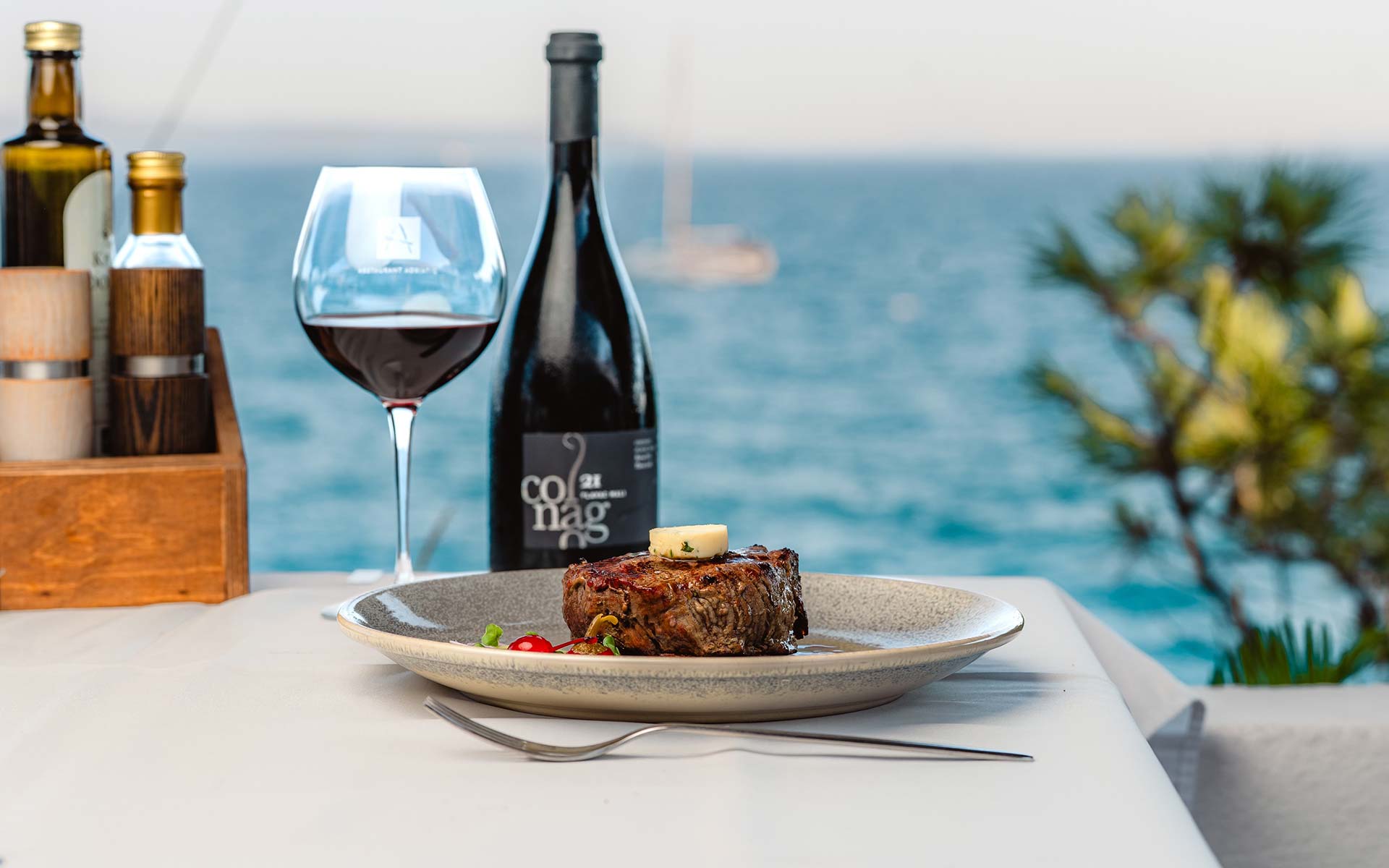
Plavac Mali
Dalmatia’s leading red reaches its peak on the steep Pelješac slopes, where Dingač and Postup produce the most concentrated versions. Expect dark fruit, dried figs, black pepper, high alcohol and firm tannin.
Bottlings from Hvar, Brač and Vis tend to be lighter and more approachable. Served slightly chilled, those work with far more than steak, including grilled tuna and dishes most guests would automatically pair with white.
Tribidrag (Croatian Zinfandel)
Most visitors meet this grape under a different name. Tribidrag is the same variety as Zinfandel in California and Primitivo in Puglia, a link confirmed by DNA testing after decades of speculation.
It is also one parent of Plavac Mali, and not the only one: the other is Dobričić from the island of Šolta. The variety had nearly vanished when researchers collected samples from nine surviving vines at Kaštel Novi near Split in 2001.
In the glass, it is riper and rounder than Plavac Mali, with softer tannins and more pronounced ripe fruit.
Babić
Primošten and the stone terraces along the Šibenik coast give Babić its character: sour cherry, dried herbs and fresher acidity than Plavac Mali.
That acidity makes it particularly food-friendly and a reliable choice for a mixed table, where it can handle lamb without overpowering tuna steak.
Teran
Istria’s signature red grows in the region’s distinctive iron-rich red soil, reflected in the wine’s earthy, mineral character. Sharp acidity, a mineral iron note and low alcohol produce something lean and bracing rather than warm and rounded.
Teran was built for cured meat and grilled sausage. Pair it with delicate white fish and its acidity and intensity will quickly overwhelm the dish.
Frankovka
Slavonia and the continental north grow Frankovka into a medium-bodied red with dark cherry fruit and a peppery finish.
It works well as a middle-ground wine for dishes that sit between fish and steak, including duck, veal and poultry with richer sauces.
Croatian Rosé, Sparkling and Dessert Wines
Dry coastal rosé, usually made from Plavac Mali or Babić, is one of the most versatile wine choices in Croatia. When half the table has ordered fish and the other half meat, it can bridge the two without forcing either side into a compromise. It also has enough colour and structure to handle tuna, octopus and tomato-based dishes.
Plešivica leads Croatia’s growing production of dry sparkling wine. Bubbles and high acidity reset the palate between bites, which suits raw seafood, anything fried and anything salty.
Prošek deserves a clarification before anything else. It is a sweet Dalmatian wine made from dried grapes, an old tradition with no relationship whatsoever to Prosecco beyond an unfortunate similarity of name. Its place is at the end of the meal, with dessert or beside aged cheese.
Best Croatian Wines with Fish and Seafood
Fish is only half the equation. How it is cooked and what accompanies it often determines the wine, which is why the same sea bass can call for two completely different bottles depending on whether it is poached or grilled.
The most useful way to approach the pairing is by wine style rather than by species. A guide to the fish you will find on Dalmatian menus will tell you what brancin and zubatac are; the sauce tells you what to drink with them.
Fresh Whites for Delicate White Fish
Delicate fish can easily be overwhelmed by a wine that is too full-bodied or aromatic.The wine should be lighter than the dish, with clean acidity and restrained aromatics, so it complements rather than competes with the natural sweetness of the fish.
Citrus and olive oil dressings need acidity to meet them, and poaching or a quick turn on the grill asks for restraint rather than character. A lighter wine allows the delicate flavour of the fish to remain at the centre of the dish.
Fuller Whites for the Grill and Richer Sauces
The cooking method changes the pairing completely. Open flames bring char, while smoke, cream and butter add richness, all of which can overpower a delicate wine.
A fuller-bodied wine is better suited to these flavours, whether its character comes from riper fruit, some age or time in barrel. It should still have enough acidity to keep the pairing fresh rather than heavy.
Rosé and Light Red for Tuna, Octopus and Brodetto
The rule that seafood always calls for white wine stops working here. Some seafood has the texture and richness of red meat, some carries char from the grill, and some dishes are driven as much by tomato as they are by fish.
Colour helps in all three cases, along with a little tannin, provided the tannin stays low and the bottle goes to the table lightly chilled. Acidity should track the sauce rather than the protein, which is the part that surprises guests most.
| On the plate | Reach for | Why |
|---|---|---|
| Poached white fish | Debit, Maraština | Light enough to leave the fish alone |
| Grilled whole fish | Pošip, Grk | Stands up to char and olive oil |
| Shellfish, buzara | Malvazija, fresh Pošip | Acidity cuts garlic and oil |
| Raw and citrus starters | Sparkling, Žlahtina | Bubbles and acidity reset the palate |
| Tuna steak | Dry rosé, light Plavac Mali | Meaty texture takes color |
| Brodetto | Rosé, Babić | Follows the tomato, not the fish |
Best Croatian Wines with Meat
The basic principle is to match weight with weight, while the sauce often matters more than the cut. A veal steak in a cream sauce and a veal steak with grilled vegetables are two different pairings, even though the butcher would say otherwise. The same applies across our meat and steak selection, where the accompaniments do as much work as the protein.
Grilled Beef and Steak
Tannin and fat balance each other, which is why a plain grilled cut can handle one of the most structured reds on the list. Once herbs, lemon or vinegar appear on the plate, acidity becomes the more useful tool, since a wine that meets the dish halfway beats one that argues with it. Composed plates built around cheese sauces ask for rounder fruit and a softer grip instead.
Serving temperature matters more than most guests expect. A full-bodied Dalmatian red served at warm room temperature can taste hot and alcoholic; served slightly cooler, the same wine can taste more balanced and structured.
Lamb, Duck and Veal
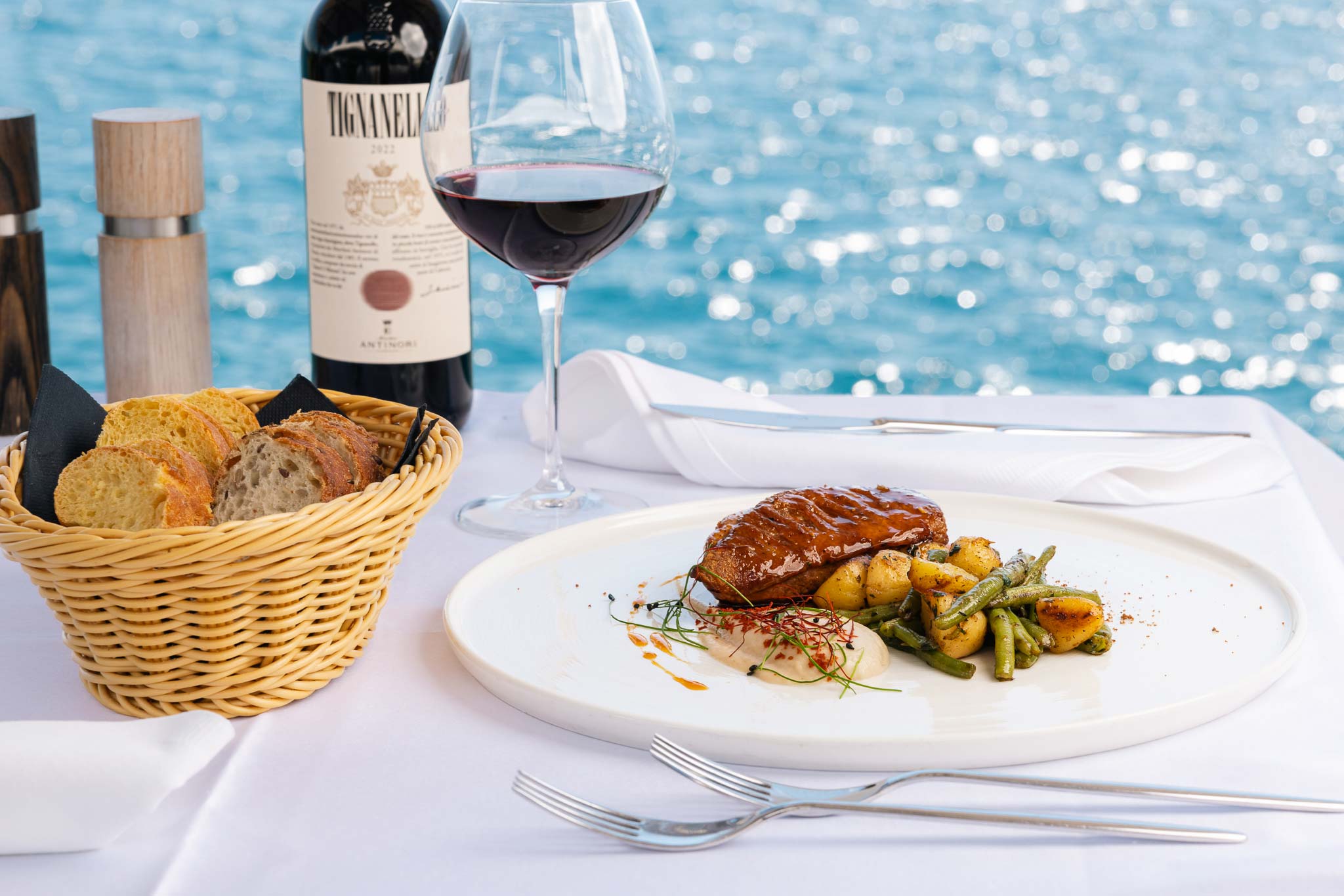
These dishes sit in the middle of the range, where medium body often works better than sheer power. Fat and herbs call for acidity to cut through them, so a lean, fresher red often outperforms a bigger one on the same plate.
Fruit-based sauces, plum or orange in particular, shift the choice further towards freshness and away from tannin. A heavy, tannic wine next to a sweet sauce can taste bitter, which is a problem with the pairing rather than necessarily with the wine itself.
Cured Meats, Cheese and Truffle
Salty cured meats and rich, cured fat tend to work better with acidity and lower alcohol than with sheer weight. A high-alcohol red next to a cured meat board tastes hot, and the board tastes saltier for it.
Aged and blue cheeses invert the usual instinct, because sweetness and body balance salt far better than tannin, which turns harsh against it. Truffle is another special case: tannin can mute its delicate aromas, so an aged white may work better than a young red. The difference between white and black truffle affects the intensity of the dish, and with it how much weight the wine needs to carry.
| On the plate | Reach for | Why |
|---|---|---|
| Grilled beefsteak | Plavac Mali | Tannin and fat balance each other |
| Composed steak plates | Tribidrag, Plavac Mali | Handles cheese sauces and richer sides |
| Lamb | Babić | Acidity cuts through fat |
| Duck and veal | Frankovka | Medium body follows fruit sauces |
| Cured meat board | Teran | Sharp acidity, low alcohol |
| Aged cheese | Aged Pošip, Prošek | Sweetness balances salt |
How to Read a Croatian Wine Label
Croatian wine labels reveal more than they first seem to, once you know a few key terms. Sweetness and colour are stated clearly, while quality categories and geographical origin are regulated rather than simply descriptive.
| On the label | What it means |
|---|---|
| Suho / polusuho / slatko | Dry / off-dry / sweet |
| Bijelo / crno / rosé | White / red / rosé |
| Kvalitetno vino KZP | Traditional Croatian term for a quality wine with protected designation of origin |
| Vrhunsko vino KZP | Traditional Croatian PDO term with stricter production requirements |
| ZOI | Protected designation of origin linked to a defined geographical area |
| Berba | Vintage, the harvest year |
Serving temperature is worth knowing too, because a wine served wrong tastes like a wine chosen wrong. Sparkling belongs at 6 to 8 °C, light whites and rosé at 8 to 10 °C, fuller whites at 10 to 12 °C, light reds at 12 to 14 °C, and Plavac Mali at 16 to 18 °C rather than whatever the terrace is doing in August.
One more thing visitors sometimes misunderstand: bevanda is red wine mixed with still water, while gemišt is white wine mixed with sparkling water. Both are ordinary local drinks on a hot afternoon, not signs that someone is trying to ruin a good bottle.
How to Choose Croatian Wine at a Restaurant
Match the sauce, not the main ingredient, and the list stops being intimidating. Grilled sea bream with lemon and olive oil wants a light, fresh white; the same fish under a truffle sauce wants a fuller one. A plain grilled steak wants tannin; the same cut with a plum sauce wants acidity and fruit instead.
Describing the dish is more useful than naming a grape you half remember. Tell the person taking your order what you have chosen and how you like your wine, then let them work from the list in front of them, which may change depending on what is available and already open. When the table splits between fish and meat, order by the glass rather than forcing one bottle to work for everyone. Alternatively, choose a dry rosé that can bridge both sides of the table.
The names are worth learning, but nobody needs to arrive fluent. Book a table at Restaurant Adriatic and let the food guide the choice.
FAQ
What is the most famous Croatian wine?
Plavac Mali is Croatia’s best-known red grape, particularly through wines from Dingač and Postup on Pelješac. Among white wines, Pošip from Korčula and Malvazija from Istria are among the best-known varieties.
What is the difference between Plavac Mali and Zinfandel?
Zinfandel is the same grape variety as Tribidrag, one of the two parent grapes of Plavac Mali. Plavac Mali is their offspring, generally more tannic, peppery and higher in alcohol.
Is Croatian rosé sweet or dry?
Almost always dry. Coastal rosé is usually made from Plavac Mali or Babić, with fresh acidity and enough structure for tuna, octopus and tomato-based dishes.
What is Prošek?
Prošek is a sweet Dalmatian dessert wine made from dried grapes, traditionally served with dessert or aged cheese. Despite the similar name, it has no connection to Italian Prosecco.
Why is Croatian wine hard to find outside Croatia?
Production is relatively small and vineyards are fragmented, often on steep terraces that require hand harvesting. Much of the wine is consumed domestically, leaving less volume available for export.