
Traditional Croatian Food: 12 Local Specialties You Should Try
Traditional Croatian food reflects the country’s varied geography and history. Along the Adriatic, cooking follows a Mediterranean pattern built around fish, olive oil, garlic, wine and herbs. Inland cooking relies more heavily on pork, fermented cabbage, paprika, cream and long, slow preparation, reflecting Central European and Ottoman influences. The 12 specialties below represent both coastal and inland traditions. At our seafood restaurant on Sustipan, we prepare several of the coastal dishes covered here, including gregada, brudet and buzara, alongside the daily catch and regional pasta.
| Specialty | Region | What to expect |
|---|---|---|
| Pašticada with gnocchi | Dalmatia | Marinated beef slowly braised in a sweet-sour sauce |
| Peka | Dalmatia and other regions | Meat or octopus with potatoes cooked under a bell |
| Gregada | Hvar and central Dalmatia | White fish and potatoes simmered with olive oil and wine |
| Brudet | Adriatic coast | Tomato-based fish or seafood stew served with polenta |
| Buzara | Adriatic coast | Shellfish cooked with garlic, wine and parsley |
| Black risotto | Dalmatia and the Adriatic coast | Cuttlefish or squid risotto coloured with ink |
| Soparnik | Poljica near Omiš | Thin pie filled with Swiss chard and red onion |
| Fritule | Dalmatia and Istria | Small festive fried pastries |
| Fuži with truffles | Istria | Handmade pasta served with Istrian truffles |
| Zagorski štrukli | Hrvatsko Zagorje | Cheese-filled dough served boiled or baked |
| Sarma | Continental Croatia | Fermented cabbage leaves filled with meat and rice |
| Slavonian kulen | Slavonia and Baranja | Paprika-spiced dry-cured pork sausage |
Why Croatian cuisine changes from coast to inland
Much of Croatia’s Adriatic coast was under Venetian rule or influence for centuries and was part of wider Mediterranean trade. That history is still visible in dishes and names such as brudet and fritule, while olive oil, wine and seafood remain central to coastal cooking.
Inland cooking reflects Austrian, Hungarian and Ottoman-era influences, visible in dishes such as štrukli, strudels, goulash, sarma and ćevapi. Between them lies the Dalmatian hinterland, or Zagora, known for lamb, pršut and mature sheep’s cheese.
What makes Dalmatian food distinctive
Dalmatian cooking is often defined by simplicity. A whole fresh fish may need little more than good olive oil, sea salt, garlic, parsley and heat. Our chef follows the same principle: the better the fish that comes off the boat, the less it needs to be changed. Three principles follow from that approach.
- The main ingredient leads the dish. Freshness determines the result, so good fish, olive oil and seasonal vegetables need little embellishment.
- Preparation is a choice. The same white fish can be grilled or prepared as gregada or brudet, depending on the flavour and texture you prefer.
- Many dishes are made for sharing. Peka and larger servings of brudet or buzara are often placed at the centre of the table.
Croatia joined UNESCO’s multinational Mediterranean diet inscription in 2013, with Brač and Hvar recognised as its emblematic communities.
Traditional Dalmatian Food and Coastal Specialties
The following specialties reflect the diversity of Croatia’s Adriatic cuisine, from traditional dishes to distinctive methods of preparation.
1. Pašticada with gnocchi
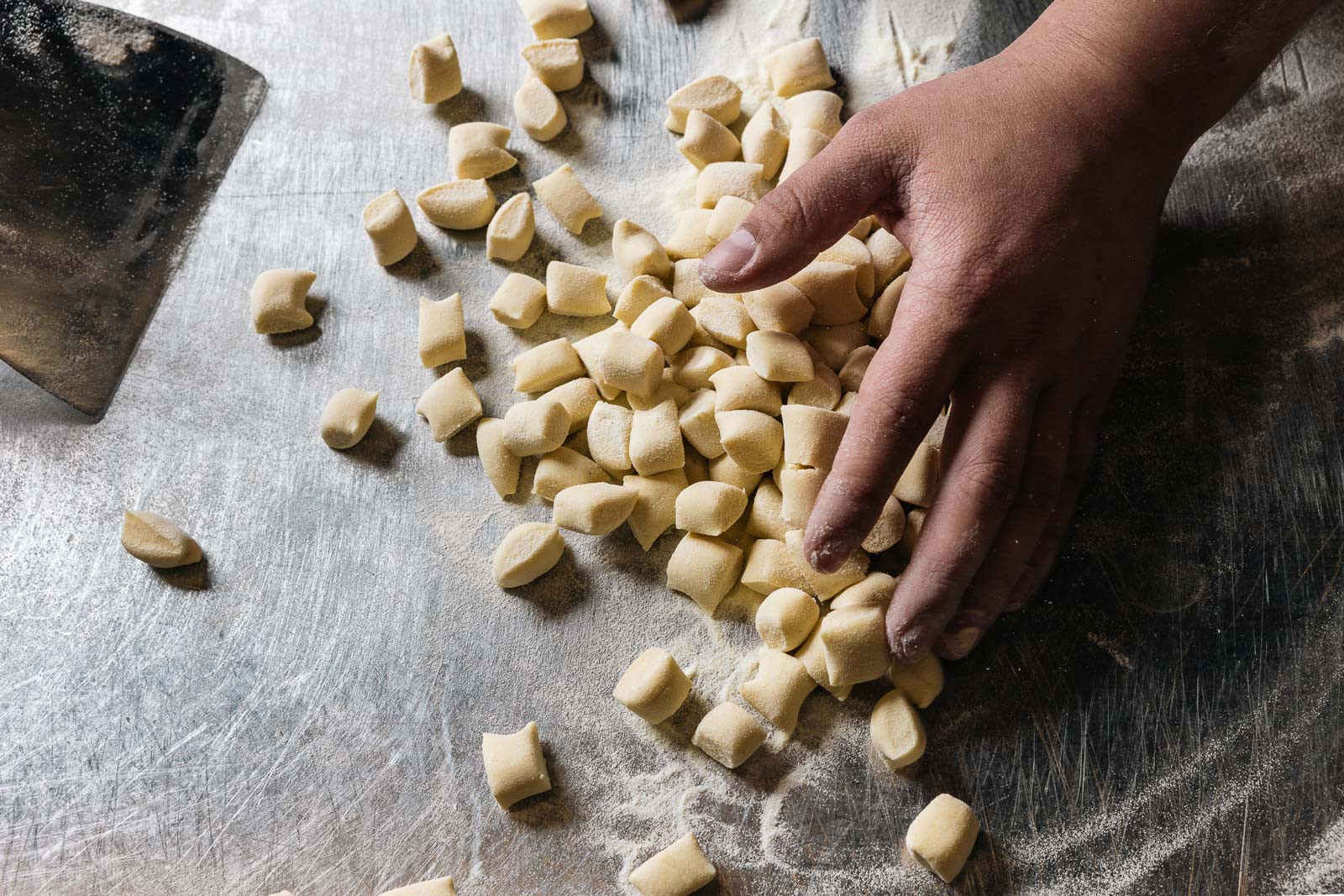
Pašticada is a Dalmatian beef dish marinated in vinegar, larded with pancetta and garlic, then braised slowly with root vegetables, prunes, red wine and prošek until the sauce becomes dark and sweet-and-sour. It is traditionally served with homemade gnocchi. Preparation often begins a day or two before serving, and the dish is associated with weddings, family celebrations and patron-saint feast days. Because of its ceremonial role and lengthy preparation, it is often called the queen of Dalmatian cuisine.
2. Peka
Peka is a cooking method in which meat or octopus and potatoes are placed in a shallow pan and covered with a heavy clay or cast-iron bell. Hot embers are heaped over the lid so the food cooks slowly in its own juices. Veal, lamb and octopus are the classic choices. Cooking time depends on the ingredients and portion size, and many restaurants require peka to be ordered in advance.
3. Gregada
Gregada is a white fish stew associated particularly with Hvar and the central Dalmatian islands. Fish, sliced potatoes and onion are cooked gently with olive oil, white wine and enough water or fish stock to create a light broth. It is one of Hvar’s best-known traditional fish preparations and remains lighter than brudet because it contains no tomato. The fish remains the main flavour, while the potatoes and olive oil give the broth body.
4. Brudet or brodetto
Brudet is a tomato-based Adriatic fish stew made with onion, garlic, wine and one or more kinds of fish or seafood. It is commonly served with soft polenta, which absorbs the sauce. Its name varies along the coast between brudet, brodet and brodetto, and so does the recipe. Compared with gregada, brudet has a richer, darker sauce, while the changing catch means that the pot may contain several fish commonly served in Croatian restaurants.
5. Shellfish prepared buzara-style
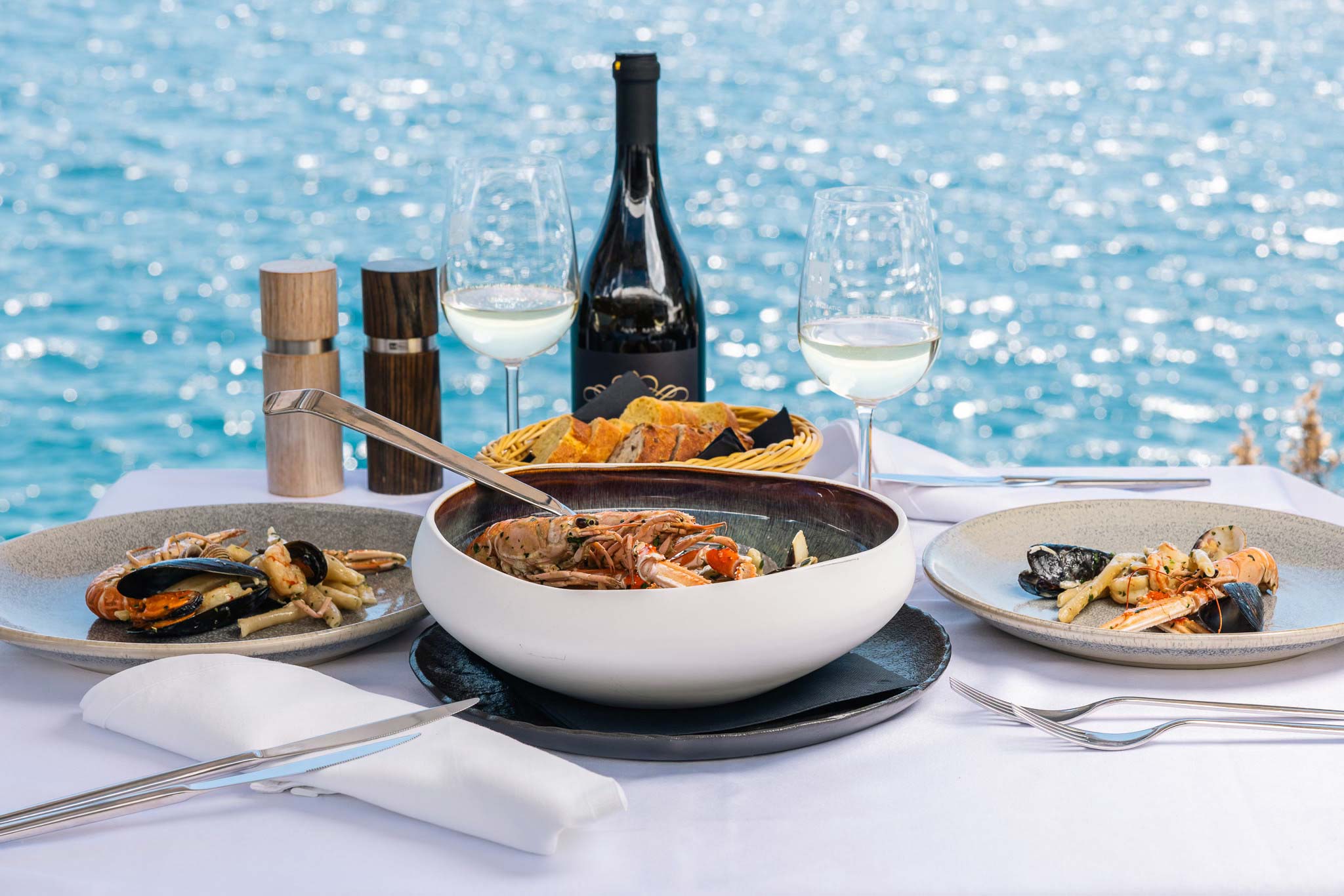
Buzara is a preparation in which shellfish simmer in olive oil, garlic, white wine, parsley and often breadcrumbs, which thicken the liquid into a sauce that clings to the shells. There are two versions: white buzara, without tomato, and red buzara, with it. Scampi, clams and mussels are common choices. Buzara is normally served with bread for soaking up the sauce, while shell-on seafood is eaten by hand.
6. Black risotto
Black risotto, crni rižot, combines cuttlefish or squid with rice, garlic, onion, olive oil, white wine and the seafood’s ink, which gives the dish its glossy black colour. The ink also gives the rice a deep, briny flavour. Recipes and finishing ingredients vary between households and restaurants.
7. Soparnik
Soparnik is a thin savoury pie from Poljica near Omiš, filled with Swiss chard and red onion between two sheets of unleavened dough, baked on a hearth and finished with olive oil and crushed garlic. It is registered as an EU Protected Geographical Indication under the names Poljički soparnik, Poljički zeljanik and Poljički uljenjak, and its traditional ingredients are vegan.
8. Fritule
Fritule are small pieces of fried dough, often flavoured with citrus zest, raisins or a splash of rakija, then dusted with sugar and eaten warm. They are especially associated with Christmas and coastal festivals, where they are sold in paper cones and prepared in large batches at home. They are closer to a fritter than a doughnut.
Traditional Croatian Dishes from Other Regions
Beyond Dalmatia, Croatia’s regional cooking shifts again, from Istrian pasta and truffles to the dairy-rich dishes of Zagorje and the smoked meats of Slavonia.
9. Istrian fuži with truffles
Fuži are handmade Istrian pasta made from diamond-shaped sheets of dough that are rolled and pinched into small quills, leaving a hollow centre where the sauce collects. Istrian truffles come from the forest belt around Motovun and Buzet, where black truffles are found through much of the year, while the white truffle season runs roughly from September to January. We serve our fuži with prosciutto, prošek and black truffle. White and black truffles differ in season, aroma and culinary use, which affects how they are paired with pasta and other dishes.
10. Zagorski štrukli
Zagorski štrukli are pockets of thin dough filled with fresh cottage cheese, eggs and sour cream, then either boiled or baked with more cream poured over the top. They come from Hrvatsko Zagorje, north of Zagreb, and were registered as a Protected Geographical Indication by the European Commission in 2022. When baked, they are rich and browned at the edges; when boiled, they are closer to a dumpling.
11. Sarma
Sarma is usually made with minced pork and beef mixed with rice, wrapped in fermented cabbage leaves and simmered slowly with smoked meat until the flavours come together. It is a winter staple in continental Croatia and appears on many Christmas and New Year tables. It is often reheated the following day, when the flavours have developed further.
12. Slavonian Kulen
Kulen is a dry-cured pork sausage from Slavonia and Baranja, seasoned generously with sweet and hot paprika and garlic, packed into a natural casing and matured for months. Both Slavonski kulen and Baranjski kulen hold EU Protected Geographical Indication status, linking production to defined geographical areas, specified ingredients and traditional methods that include smoking, drying and months of maturation.
What Traditional Croatian Food Should You Try in Split?
Split sits in central Dalmatia, so coastal dishes dominate local menus. Continental specialties are less common, although dishes such as kulen may be served as starters. If you are deciding where to eat in Split, consider both the food and the setting: a casual konoba, a quick lunch in the city centre or a longer dinner by the sea.
Best Croatian dishes for seafood lovers
Start with the daily catch. Choose it grilled if you want the simplest expression of the fish, or prepared as gregada or brudet if you prefer a dish with a sauce or broth. From there, think about the preparation rather than the species:
- Shellfish buzara when you want garlic, wine and plenty of sauce for dipping bread.
- Black risotto for a deeper, more savoury seafood flavour.
- Octopus, served as a cold salad or slow-cooked in a stew, when you prefer a firm, meaty texture.
- Tuna tartare for a lighter, more contemporary starter, although it is not itself a traditional Croatian dish.
Best Croatian dishes for meat lovers
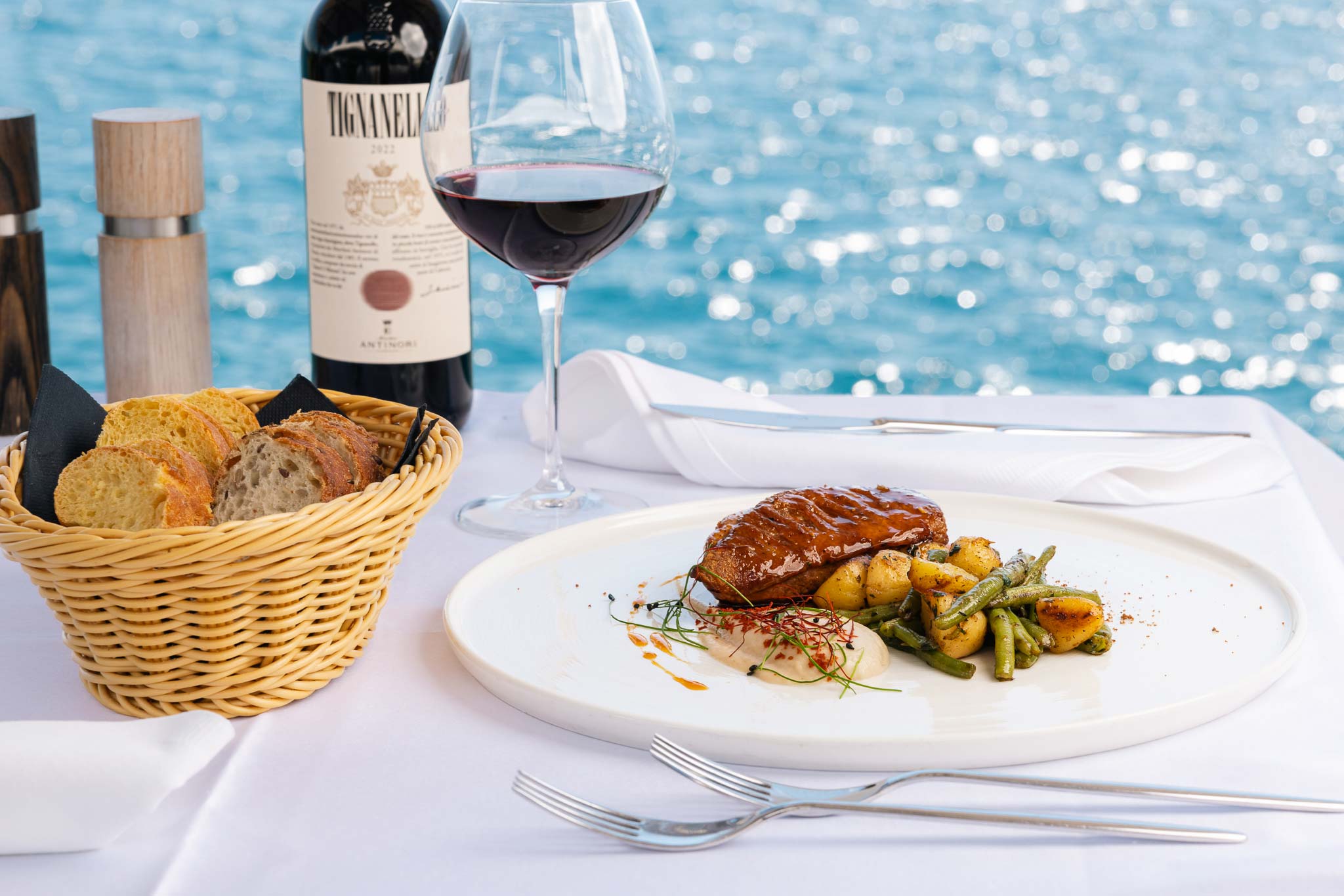
Dalmatian cooking reaches well beyond fish. Lamb from the Zagora and the islands, slow-roasted under the bell, is one of the region’s best-known meat traditions, while pašticada is closely associated with celebrations and special occasions. Alongside seafood, we offer meat dishes including lamb rack and Adriatic beef steak, giving groups with different preferences several choices. Kulen also appears on our Tagliere Rustico board with prosciutto, boškarin salami and selected cheeses.
Best choices for vegetarians
Coastal Croatia has a long tradition of vegetable-based cooking shaped by seasonal produce and fasting days. Soparnik is one of the clearest examples. Blitva, or Swiss chard cooked with potatoes and dressed with olive oil, is another traditional side dish. Our menu also includes separate vegetarian, vegan and gluten-free options, including vegetable linguine and beetroot risotto. If you have an allergy or require strict gluten-free preparation, confirm the details with our team before ordering.
From Croatian Tradition to the Adriatic Table
Wild-caught fish sourced from fishermen on Vis connects our menu directly to Dalmatian cooking, while the species available to guests change with the day’s catch.
Gregada, brodetto and grilled daily catch
The day’s catch of white fish can be grilled or prepared as gregada or brudet. You choose from the fish available that day and then decide how you would like it prepared. Our octopus-and-squid brudet is a separate menu dish served with polenta, onion-and-orange marmalade and flavoured cheese, offering a contemporary interpretation of the traditional stew.
Buzara-style shellfish and Dalmatian-style octopus
Shellfish are prepared buzara-style, while scampi can be grilled or served as brudet or buzara. Lobster and spiny lobster are available in 0.5 kg portions and can be grilled or prepared buzara-style. Our cold Dalmatian-style octopus starter combines broad beans, capers, chickpeas, red onion, cherry tomatoes and parsley.
Local pasta and modern interpretations of coastal flavors
Two dishes on our menu draw directly on regional pasta traditions. We serve Istrian fuži with prosciutto, prošek and black truffle. Korčulanski makaruni, a hand-rolled pasta from the island of Korčula, are prepared buzara-style for two with scampi, clams, mussels and prawn tails.
Our à la carte menu also gives coastal ingredients a modern treatment in dishes such as monkfish in a nut crust with truffle sauce, sea bass fillet with saffron beurre blanc and gnocchi with smoked mussels and pistachio.
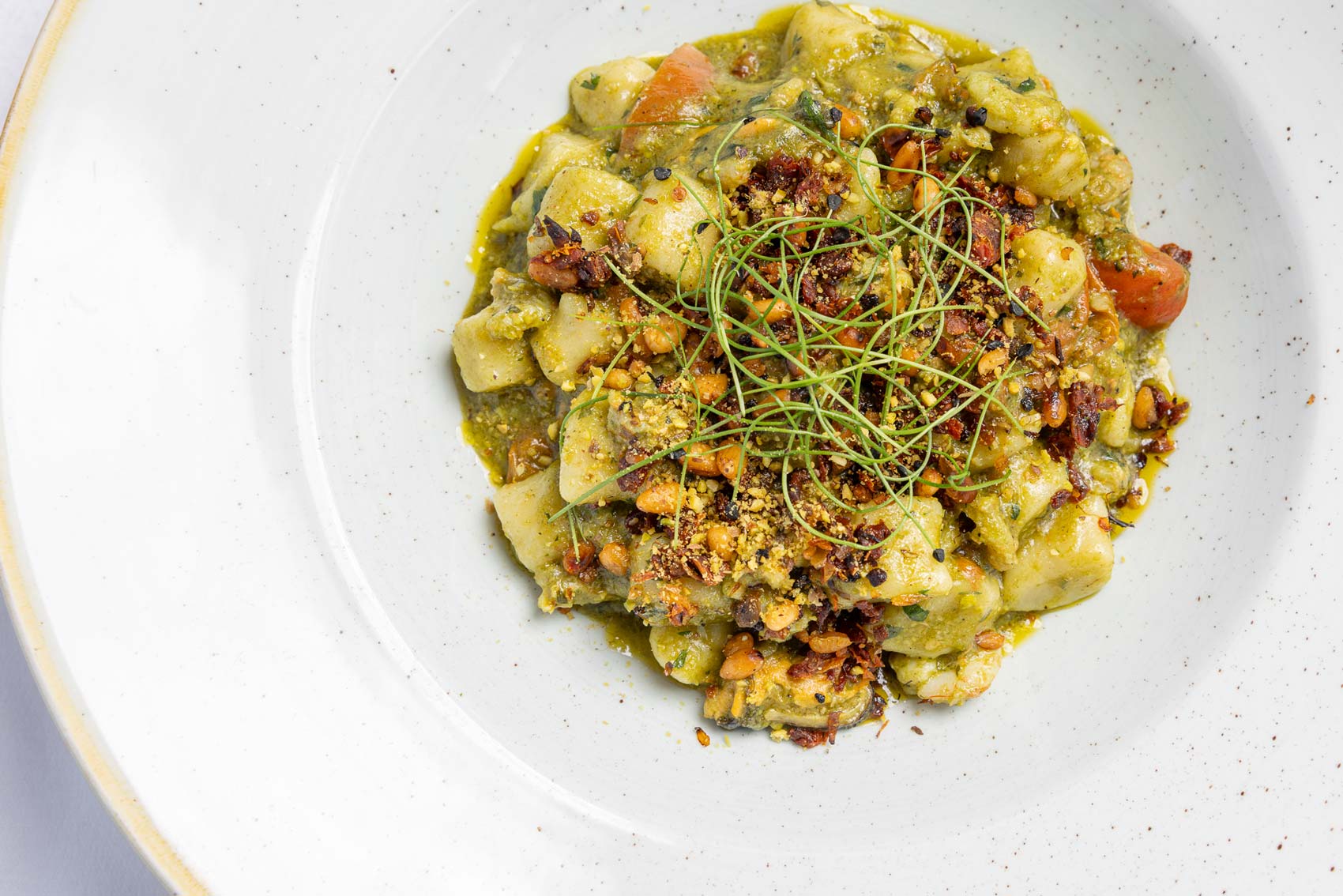
Evening terrace tables fill quickly during the season, so we recommend booking a table in advance.
How to Order Traditional Croatian Food in Split
A few simple habits can make ordering along the Dalmatian coast easier, especially if it is your first time dining here.
Ask about the daily catch
Whole fresh fish is commonly priced by weight, with the available species depending on the day’s catch. In many restaurants, the fish is presented before preparation so guests can see what is available. At Adriatic, whole fresh fish is also priced by weight, and the available species vary according to the day’s catch. If you would like to ask about current availability, contact our team about the daily catch before your visit.
Check how fresh fish and shellfish are portioned
At Adriatic, the daily catch, lobster, spiny lobster, shellfish, scampi and squid are listed in 0.5 kg portions. Confirm the total weight and price when ordering, particularly if you plan to share, so you can plan the rest of the meal around the seafood course.
Choose the preparation, not only the fish
The preparation changes the character of the dish, from simply grilled fish and light gregada to richer brudet and shellfish buzara. When preparing the day’s catch, our chef keeps the natural character of the fish at the centre of the dish.
| If you want | Ask for | What to expect |
|---|---|---|
| Fish prepared simply | Grilled fish | Fish cooked with minimal seasoning, usually olive oil and lemon |
| A lighter fish stew | Gregada | White fish and potatoes with onion, olive oil and wine |
| A richer shared dish | Brudet | Tomato-based fish stew, normally served with polenta |
| Shellfish with sauce for bread | Buzara | Shellfish cooked with garlic, white wine and parsley |
Pair the meal with Croatian wine
A crisp white wine with good acidity suits raw starters, shellfish and lightly cooked fish, while a fuller white works better with grilled fish, smoky flavours and richer sauces. Tuna, octopus and tomato-based stews can also pair well with a dry rosé or light red. Tell your waiter what you plan to order and how you would like it prepared, and our team can recommend a wine from the current list.
Frequently Asked Questions
What food is Croatia most famous for?
The answer depends on the region. The coast is known for grilled fish, black risotto and shellfish buzara; Dalmatia for pašticada and peka; Istria for fuži and truffles; and Slavonia and Baranja for kulen.
What traditional Croatian food should I try in Split?
Start with the daily catch. Choose grilled fish for the simplest preparation, gregada for a lighter broth or brudet for a richer tomato-based stew. Shellfish buzara and Dalmatian-style octopus are good choices to share.
Are there vegetarian traditional Croatian dishes?
Yes. Soparnik and blitva are well-known Dalmatian examples, while Zagorski štrukli and fritule are generally vegetarian. Pasta recipes vary, so check whether they contain prosciutto, meat stock or other animal ingredients before ordering.
What is the difference between gregada and brudet?
Choose gregada for a lighter combination of white fish, potatoes, olive oil and wine. Choose brudet for a richer tomato-based fish stew, usually served with polenta.
What does buzara mean on a Croatian menu?
Buzara is a method of preparing shellfish with garlic, wine, olive oil and parsley. White buzara contains no tomato, while red buzara includes tomato. It is normally served with bread for soaking up the sauce.